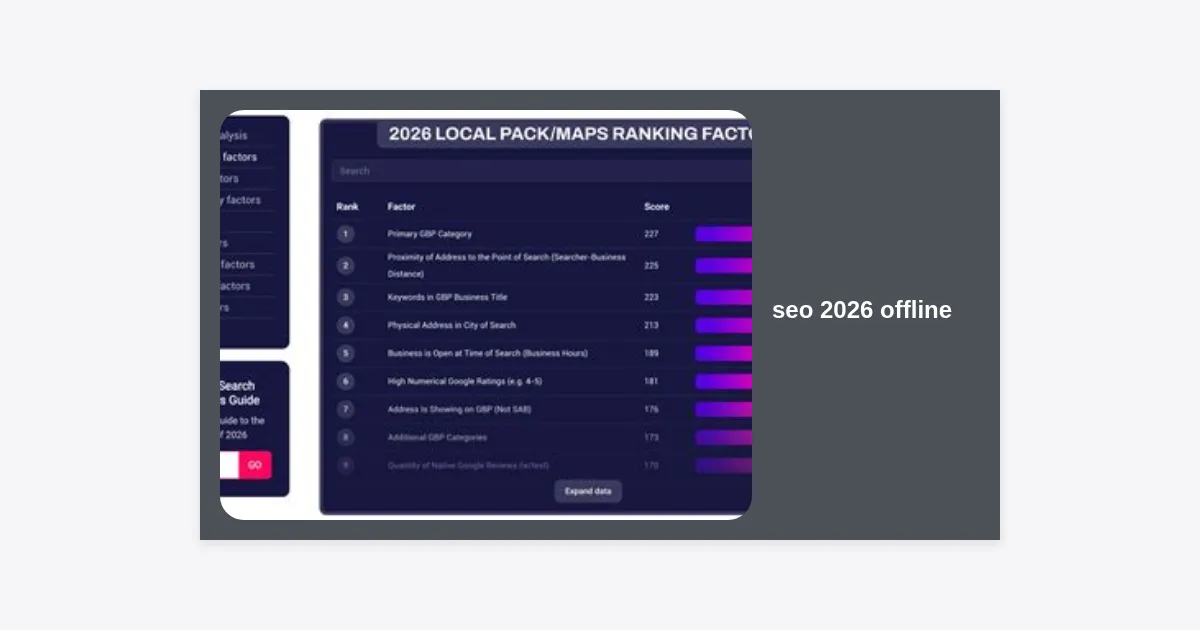
In the rapidly evolving landscape of digital marketing, the concept of seo 2026 offline has emerged as a cornerstone for businesses looking to stay ahead of the curve. As we approach 2026, the traditional boundaries between local storefronts and digital search results are effectively dissolving. Consumers no longer distinguish between their ‘online’ research and ‘offline’ purchases; they expect a seamless transition that rewards brands with high visibility in both spheres. Understanding how to leverage offline signals to boost your online authority is the secret to surviving the next era of search engine optimization.
Table of Contents
- Defining SEO 2026 Offline: The New Frontier
- Local SEO 3.0: Beyond the Map Pack
- How Offline Brand Recognition Drives Online Rankings
- Spatial Computing and AR: The Physical Search Layer
- The Role of IoT Devices in Offline Search Signals
- Actionable Strategies for 2026 Offline Integration
- Measuring the Unmeasurable: Attribution in 2026
- Conclusion: Your Roadmap to Future-Proof SEO
Defining SEO 2026 Offline: The New Frontier
By 2026, SEO is no longer just about keywords and backlinks; it is about presence. When we discuss seo 2026 offline, we are referring to the optimization of physical-world triggers that signal to search engines that a business is credible, authoritative, and popular in the real world.
Google and other search engines have increasingly sophisticated methods of tracking user movement via mobile device location history. If a physical store sees a high volume of foot traffic, search engines interpret this as a strong signal of brand authority. This “offline signal” directly influences your digital rankings, creating a loop where physical success fuels online visibility.
To master this, businesses must reconsider their marketing silos. The goal for 2026 is to create a digital footprint that is deeply rooted in physical reality. This includes everything from QR code engagement to localized event sponsorships that generate hyper-local backlinks and social mentions.
Local SEO 3.0: Beyond the Map Pack
Traditional Local SEO focused on NAP (Name, Address, Phone number) consistency. However, for seo 2026 offline success, the focus shifts toward experiential data. Search engines now prioritize businesses that offer a superior physical experience, as reflected in real-time localized data.
The Death of Keyword Stuffing in Local Pages
In 2026, AI-driven search algorithms are smart enough to understand the context of a physical location without needing the city name repeated fifty times on a page. Instead, they look for “Local Proof points.” For example, does your business host community workshops? Are there localized news articles mentioning your physical impact? These are the factors that will move the needle.
Hyper-Personalized Location Signals
User location isn’t just a coordinate anymore; it’s a history. If a user frequently visits premium coffee shops, their search results for “SEO agencies” might prioritize firms located near those high-end areas. This intersection of personal lifestyle and physical proximity makes the seo 2026 offline strategy more complex and rewarding than ever before.
How Offline Brand Recognition Drives Online Rankings
One of the most overlooked aspects of seo 2026 offline is the power of brand searches. When a customer sees your billboard or attends your seminar, they are likely to search for your brand name later. This is a massive SEO signal.
- Direct Traffic: High volumes of direct traffic from a specific geographic area tell Google that your brand is a “top of mind” entity.
- Navigational Queries: When users search for “[Brand Name] [Keyword],” it strengthens the topical authority of your site for those keywords.
- Entity Association: Search engines are increasingly focused on “Entities.” Real-world presence solidifies your entity in the Knowledge Graph.
Practically, this means your offline advertising (TV, radio, outdoor) should be designed with search in mind. Use memorable phrases or unique offerings that prompt a specific search query rather than a generic one. This direct path from the physical world to the search bar is the essence of modern offline SEO.
Spatial Computing and AR: The Physical Search Layer
As we move deeper into 2026, spatial computing devices like the Apple Vision Pro and Meta Quest have reached mass adoption. This introduces a new layer to seo 2026 offline: Augmented Reality (AR) Search.
Imagine a user walking down a street and looking at a building through their AR glasses. The search engine overlays digital data—reviews, menus, and booking buttons—directly onto the physical structure. Optimizing for this “Physical Search Layer” requires businesses to have robust, 3D-ready digital assets and highly accurate geospatial data.
“The physical world is the new browser. Every storefront is a landing page, and every product display is a metadata tag.”
To optimize for spatial search, ensure your business is listed on all major spatial maps and that your 3D assets (like store layouts or product models) are crawlable and optimized for fast loading. This is the ultimate integration of offline presence and digital ranking.
The Role of IoT Devices in Offline Search Signals
The Internet of Things (IoT) encompasses everything from smart fridges to connected cars. In the context of seo 2026 offline, these devices act as persistent data points. A connected car’s navigation history or a smart home’s grocery replenishment cycle provides search engines with deep insights into consumer behavior.
For businesses, this means that providing value in the “passive search” environment is key. If a consumer’s smart car frequently parks at your brick-and-mortar location, the search engine associates that household with your brand. When that user later searches for an industry-related term on their phone, your business will likely rank higher due to this established physical relationship.
Actionable Strategies for 2026 Offline Integration
Understanding the theory is one thing, but implementing seo 2026 offline tactics requires a specific action plan. Here are the steps you can take today:
- Implement Advanced QR Code Tracking: Don’t just link to your homepage. Use dynamic QR codes that trigger localized landing pages, collecting first-party data that can be used to refine your digital retargeting and SEO signals.
- Host Geo-Tagged Events: Create local meetups or events. Ensure these are registered on platforms like Eventbrite and Meetup, and encourage attendees to check in on social media. The resulting geofenced social buzz is a powerful SEO signal.
- Optimize for “Near Me” Visual Search: Use high-resolution photography of your physical premises and products. Google Lens and other visual search tools are massive drivers of 2026 search traffic.
- Leverage Physical-to-Digital Reviews: Encourage customers to leave reviews while they are still physically at your location. The GPS metadata attached to these reviews carries significantly more weight in 2026 than a review left from a remote desktop.
Measuring the Unmeasurable: Attribution in 2026
One of the biggest hurdles in seo 2026 offline is attribution. How do you know that a physical flyer led to a digital conversion? In 2026, we utilize Multi-Touch Attribution (MTA) models that include location data.
By analyzing the correlation between offline campaign drops and spikes in localized organic search volume, you can calculate the “Search Lift” of your offline efforts. Modern analytics dashboards now integrate with mobile location data providers to show the exact path a user took from seeing a physical ad to making a digital purchase. This data is vital for justifying the spend on holistic offline/online SEO strategies.
Key Statistics for 2026
| Metric | Impact on Ranking | Offline Influence |
|---|---|---|
| Brand Search Volume | High | Driven by Billboards/Radio |
| Location Citations | Medium | Driven by Local Events |
| Foot Traffic Density | Very High | Driven by In-Store Experience |
| AR Engagement Rate | High | Driven by Storefront Signage |
Conclusion: Your Roadmap to Future-Proof SEO
The journey toward mastering seo 2026 offline is not a sprinting race; it is a fundamental shift in how we perceive the relationship between the physical and digital worlds. As AI continues to dominate search, the only truly unique, non-gameable signal left is real-world human interaction.
Key Takeaways:
- Prioritize real-world foot traffic as a primary SEO ranking factor.
- Ensure your brand is optimized for the spatial computing and AR devices of 2026.
- Use offline triggers like events and QR codes to drive branded search queries.
- Integrate location data into your attribution models to see the full picture of your SEO ROI.
To dive deeper into these strategies, you can download our comprehensive 2026 SEO Strategy Roadmap. This guide provides step-by-step instructions on merging your physical assets with digital dominance.
Start today by auditing your physical presence. Does your storefront reflect your digital brand? Does your local community know you exist? In the year 2026, if you aren’t visible offline, you simply won’t exist online.