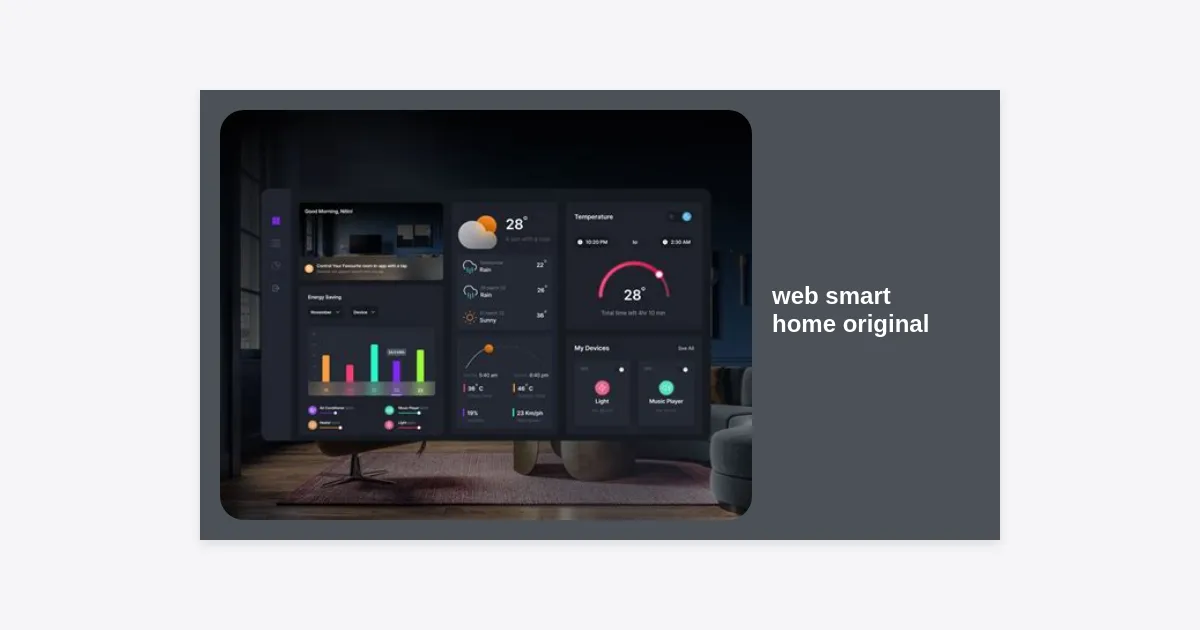
In an era where technology evolves at the speed of light, finding a web smart home original solution that offers both longevity and innovation can be a daunting task. We have transitioned from basic timer-based lights to complex ecosystems where our refrigerators can order groceries and our thermostats learn our sleep patterns. However, the true power of a modern setup lies in its foundational architecture—the original web-integrated systems that prioritize interoperability and user control over proprietary restrictions. If you have ever felt overwhelmed by managing a dozen different apps just to turn off your bedroom light, you are in the right place to discover a more streamlined, original approach.
- Understanding the Web Smart Home Original Concept
- The Evolution of Home Automation: Why Web-First Matters
- Core Benefits of an Original Web-Centric Ecosystem
- Essential Hardware for Your Web Smart Home
- Connectivity Protocols: The Language of Your Home
- Designing Your Original Web Dashboard
- Security and Privacy: Protecting Your Digital Sanctuary
- Step-by-Step Implementation Guide
- Common Challenges and Expert Solutions
- The Future of Original Smart Home Technology
- Final Thoughts and Key Takeaways
Understanding the Web Smart Home Original Concept
When we talk about a web smart home original system, we are referring to the core philosophy of utilizing open web standards (like HTML5, CSS, and WebSockets) to control and monitor domestic environments. Unlike “walled garden” ecosystems that lock you into a single manufacturer, an original web-based approach focuses on direct browser access and local server control. This ensures that your home remains functional even if a specific company’s cloud server goes offline.
The term “original” implies a return to the roots of the Internet of Things (IoT), where devices were meant to be accessible and programmable. By leveraging web technologies, users can create custom interfaces that aggregate data from various sensors and actuators into a single, cohesive viewpoint. This isn’t just about convenience; it is about reclaiming ownership of the digital components within your physical living space.
The Evolution of Home Automation: Why Web-First Matters
Early home automation was limited to expensive, hard-wired systems installed during house construction. As wireless technology matured, we saw the rise of the “App-for-Everything” era. While this made entry easier, it created a fragmented experience. The web smart home original movement seeks to fix this fragmentation by using the web browser as the universal remote.
According to recent industry data, the average smart home now contains over 22 connected devices. Managing these through independent apps leads to “app fatigue.” By shifting to a web-first original architecture, you can unify products from different brands through a centralized hub that serves a localized web interface. This transition represents a shift from consumer-level gadgets to professional-grade home infrastructure.
Core Benefits of an Original Web-Centric Ecosystem
Implementing a web smart home original framework offers several distinct advantages that proprietary systems simply cannot match:
- Cross-Platform Compatibility: Access your home control from any device with a browser—be it a smartphone, tablet, laptop, or even a smart fridge.
- Reduced Latency: Local web control is significantly faster than sending a command to a cloud server in another country and waiting for it to come back.
- Data Sovereignty: Your usage habits, occupancy data, and temperature logs stay on your local network rather than being sold to third-party advertisers.
- Lower Long-Term Costs: Because you aren’t tied to a subscription-based cloud service, you avoid “planned obsolescence” and monthly fees.
The Importance of Interoperability
In a web smart home original setup, interoperability is the highest priority. When devices can talk to each other regardless of their brand, you can create complex automations, such as having your smart blinds close automatically when your web-connected weather station detects high solar radiation. This level of synergy is what separates a truly “smart” home from one that just has a few gadgets.
Essential Hardware for Your Web Smart Home
To build a robust web smart home original environment, you need a mix of reliable hardware components. Here is a breakdown of the essentials:
| Component Category | Recommended Hardware | Role in the Ecosystem |
|---|---|---|
| Gateway/Hub | Raspberry Pi 4/5 or Intel NUC | The “brain” that runs your local web server and automation logic. |
| Smart Lighting | Zigbee or Z-Wave Bulbs (e.g., Philips Hue, IKEA Tradfri) | Controlled via the web interface for atmosphere and energy saving. |
| Sensing | Multi-sensors (Motion, Temp, Humidity) | Provides the data necessary for the hub to make decisions. |
| Connectivity | CC2652P Zigbee Dongle | Allows your web server to communicate with low-power wireless devices. |
Connectivity Protocols: The Language of Your Home
The backbone of any web smart home original system is the communication protocol. You should aim for protocols that are well-documented and widely supported in the developer community.
MQTT (Message Queuing Telemetry Transport)
MQTT is the gold standard for original smart home messaging. It is a lightweight publish-subscribe protocol designed for low-bandwidth, high-latency environments. In your web-centric home, MQTT acts as the post office, delivering messages between your sensors and your web dashboard in milliseconds.
Zigbee and Z-Wave
These are mesh networking protocols. Unlike Wi-Fi, which can become congested with too many devices, Zigbee and Z-Wave devices strengthen the network the more you add them. Utilizing an original web smart home hub with a Zigbee stick allows you to control hundreds of devices without slowing down your home internet.
Designing Your Original Web Dashboard
The visual interface is where you interact with your web smart home original setup daily. A good dashboard should be intuitive, responsive, and data-rich without being cluttered. Consider the following design principles:
- Hierarchy of Information: Put the most used controls (like main floor lights) at the top.
- Visual Feedback: Use color changes to indicate state (e.g., yellow for a light that’s on, grey for off).
- Touch-Friendly Targets: Ensure buttons are large enough for mobile use.
- Real-time Updates: Use WebSockets so your dashboard updates instantly when a physical switch is flipped.
“A smart home is only as good as its interface. If it takes longer to open a web page than to walk to a wall switch, the technology has failed the user.” — Leading IoT Architect
Security and Privacy: Protecting Your Digital Sanctuary
Maintaining a web smart home original system requires a proactive approach to cybersecurity. Because your home is accessible via web protocols, you must ensure it isn’t an open door for bad actors.
First, always use a VPN (Virtual Private Network) for remote access rather than opening ports on your router. Second, implement SSL/TLS encryption for your internal web traffic. Third, segregate your IoT devices onto a separate VLAN (Virtual Local Area Network) so that a compromised smart bulb cannot access your personal banking computer. These “original” security practices are non-negotiable for a modern household.
Step-by-Step Implementation Guide
Ready to build your web smart home original masterpiece? Follow these practical steps to get started:
- Choose Your Hub: Purchase a Raspberry Pi and a high-quality microSD card.
- Install Home Automation Software: Consider open-source options like Home Assistant or OpenHAB, which prioritize a web-based original experience.
- Configure Local Access: Set up a static IP for your hub so your browser always knows where to find the dashboard.
- Add Your First Device: Start with a Zigbee smart plug. Use it to monitor energy usage of a high-draw appliance.
- Build a Basic Automation: Create a rule that turns on the porch light at sunset and off at sunrise using the web-integrated astronomical clock.
- Iterate and Expand: Once you are comfortable, add motion sensors to automate bathroom lighting or leak sensors under the sink.
(Looking for the download link? Right-click and save this resource to plan your original web home architecture.)
Common Challenges and Expert Solutions
Even the best web smart home original systems encounter hiccups. Here is how to handle them:
Challenge: Slow response times in the web interface.
Solution: Check your server CPU usage. If you are using a base-model Raspberry Pi, consider upgrading to a model with more RAM or switching the storage from an SD card to a more reliable SSD.
Challenge: Devices dropping off the network.
Solution: This is often due to interference. Ensure your Zigbee channel and Wi-Fi channel do not overlap. For example, if your Wi-Fi is on channel 1, set your Zigbee to channel 25.
Challenge: The web page won’t load from outside the house.
Solution: Ensure your VPN is active. Modern original setups rarely use simple port forwarding due to the high security risks involved.
The Future of Original Smart Home Technology
The next frontier for the web smart home original concept is the integration of Matter and Thread. Matter is a new royalty-free connectivity standard that aims to make all smart devices compatible with each other regardless of brand. It uses the same IP-based foundation that the web is built on, making it a perfect partner for web-centric home control.
Furthermore, local AI (Artificial Intelligence) is becoming a reality. Instead of sending your voice commands to a massive data center, original web-based hubs will process natural language locally, ensuring that your private conversations never leave your four walls. This is the ultimate evolution of the smart home—intelligent, private, and entirely user-controlled.
Final Thoughts and Key Takeaways
Building a web smart home original system is a journey, not a destination. It requires a bit more effort upfront than buying a bundle of gadgets from a big-box store, but the rewards are significantly higher. You gain a home that is tailored to your needs, respects your privacy, and stands the test of time.
Key Takeaways:
- Standardize on web technologies for maximum device longevity and control.
- Prioritize local control over cloud-dependency to ensure reliability and speed.
- Use robust protocols like MQTT and Zigbee for a stable communication backbone.
- Implement strong security measures like VPNs and VLANs from the very beginning.
- Embrace open-source software to avoid the traps of proprietary ecosystems.
By following the principles of the web smart home original approach, you are not just buying technology; you are investing in a smarter, more sustainable way of living. Start small, think big, and take control of your digital environment today.