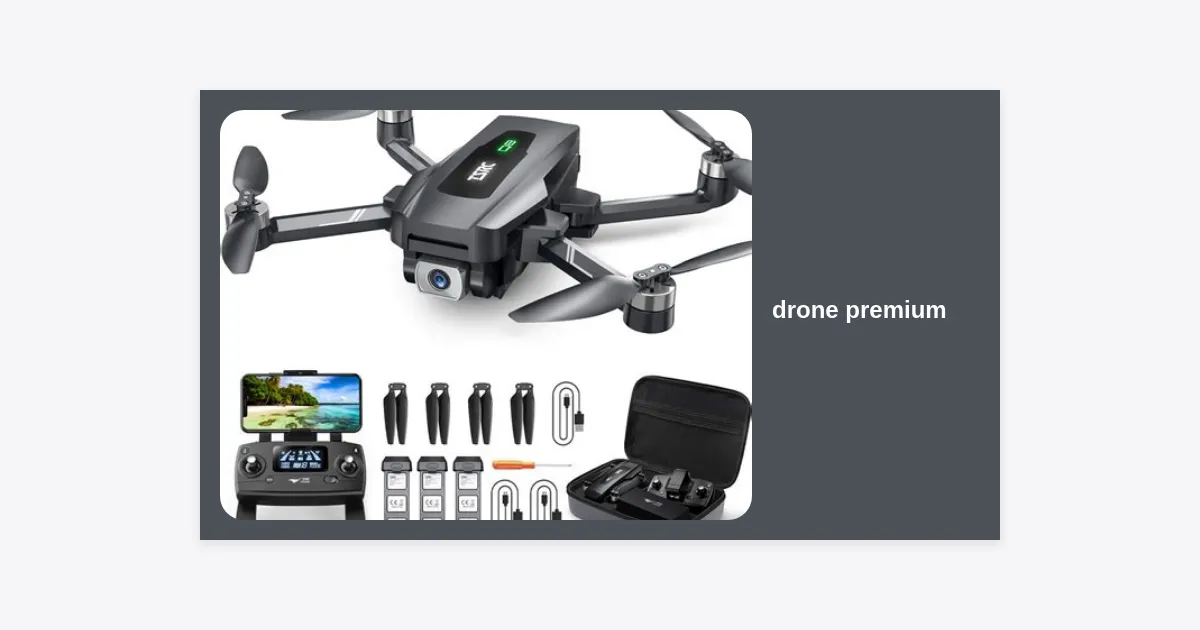
When you first lift a standard quadcopter off the ground, the thrill of flight is undeniable. However, for professionals, enthusiasts, and creators seeking more than just a hobbyist experience, the world of drone premium technology offers a gateway to unparalleled creative and industrial possibilities. A high-end drone isn’t just about a higher price tag; it is about precision, redundancy, and imaging capabilities that were once reserved for Hollywood film crews or military-grade surveillance.
As the market expands, choosing a drone premium solution requires an understanding of what truly differentiates high-end hardware from consumer toys. Whether you are looking for 8K video resolution, 1-inch CMOS sensors, or advanced omnidirectional obstacle avoidance, this guide will navigate you through the sophisticated landscape of high-performance aerial vehicles.
Table of Contents
- Defining the Drone Premium Tier: What Are You Paying For?
- Core Features of High-End Drones
- Top Drone Premium Models for 2024
- Professional Use Cases and Applications
- The Importance of the Software Ecosystem
- Maintenance and Insurance for Premium Gear
- Conclusion: Investing in the Future of Flight
Defining the Drone Premium Tier: What Are You Paying For?
The term “premium” is often thrown around in marketing, but in the UAV (Unmanned Aerial Vehicle) world, it implies a specific set of standards. To qualify as a drone premium product, a device must demonstrate superior build quality, advanced flight intelligence, and exceptional data capture capabilities.
Standard drones typically offer 1/2.3-inch sensors and basic GPS positioning. In contrast, a drone premium model will feature significantly larger sensors, such as the 1-inch or Micro Four Thirds formats. These sensors capture more light, providing greater dynamic range and lower noise in low-light conditions. This is the difference between a video that looks like a cell phone recording and one that looks like a cinematic masterpiece.
Furthermore, premium systems integrate structural redundancy. This means they often have dual batteries, dual IMUs (Inertial Measurement Units), and sophisticated return-to-home protocols that ensure your investment doesn’t fall out of the sky due to a single component failure. For a professional pilot, this peace of mind is worth every penny.
“A premium drone is not a cost; it is an investment in reliability and visual storytelling quality that entry-level gear simply cannot match.”
Core Features of High-End Drones
To truly understand the value proposition of a drone premium model, we must deconstruct the technology that powers these machines. Here are the non-negotiable features found in the upper echelons of the market.
1. Large-Format Image Sensors
The heart of any high-end drone is its camera. Premium models often utilize 1-inch CMOS sensors or even interchangeable lens systems. For example, drones that support ProRes 422 HQ recording provide editors with the “bits” necessary for heavy color grading in post-production. Without this, your footage might “break” when you try to adjust shadows or highlights.
2. Omnidirectional Obstacle Avoidance
While basic drones might have forward-facing sensors, a drone premium unit features a web of visual, infrared, and ultrasonic sensors that see in every direction. This allows the drone to navigate complex environments—like forests or construction sites—with virtually zero risk of collision. This situational awareness is powered by high-speed onboard processors that map the environment in real-time.
3. Long-Range Transmission Systems
Nothing is more frustrating than a choppy video feed. High-end models use proprietary transmission technology (like DJI’s OcuSync or Autel’s SkyLink) to provide a stable, 1080p or 4K live feed at distances exceeding 10 miles. This isn’t just about flying far; it’s about having a robust signal even in environments with high electromagnetic interference, such as urban centers.
4. Extended Flight Times
In the drone premium category, flight times of 40 to 50 minutes are becoming the standard. This is achieved through high-energy-density Intelligent Flight Batteries and more efficient motor/propeller combinations. More time in the air means more time to get the perfect shot without the constant stress of landing for a battery swap.
Top Drone Premium Models for 2024
Choosing the right machine depends on your specific needs, but several models currently dominate the drone premium landscape. Each offers a unique blend of portability and power.
- DJI Mavic 3 Pro: The gold standard for portable cinematic drones. It features a triple-camera system, including a Hasselblad main camera and two telephoto lenses, allowing for incredible creative compression and framing.
- Autel Robotics EVO II Pro V3: Known for its ruggedness and lack of restrictive geofencing, this drone is a favorite among professional photographers who need a 6K resolution and a high-adjustable aperture.
- Sony Airpeak S1: Designed specifically for professional filmmakers who want to fly their own Alpha series mirrorless cameras. This is a drone premium choice for high-end commercial production.
- Freefly Astro: For industrial and high-end mapping applications, the Astro offers a level of stability and open-source flexibility that is unmatched in the enterprise space.
Prosumer vs. Enterprise Premium
It is important to distinguish between “prosumer” premium (like the Mavic series) and “enterprise” premium (like the Matrice series). Prosumer models focus on aesthetics and ease of use for content creation. Enterprise drones, however, include features like thermal imaging, RTK (Real-Time Kinematic) for centimeter-level mapping accuracy, and the ability to carry specialized payloads like LiDAR sensors.
Professional Use Cases and Applications
Why is there such a massive demand for the drone premium market? It comes down to the ROI (Return on Investment) across various industries. Gone are the days when drones were just for “cool shots.”
Real Estate Marketing: High-end agents use premium drones to provide sweeping cinematic tours of luxury estates. The ability to fly smoothly indoors and capture 4K HDR footage outdoors makes these properties stand out in a crowded market.
Search and Rescue (SAR): In SAR operations, every second counts. A drone premium equipped with high-resolution thermal cameras can find a lost hiker through dense canopy or in total darkness. The reliability of the connection and the length of the flight time are literally matters of life and death in these scenarios.
Infrastructure Inspection: Inspecting wind turbines, cell towers, or bridges used to require dangerous manual climbing or expensive helicopter rentals. Now, a drone premium with a high-zoom lens can inspect a bolt from 50 feet away, providing crystal-clear images without putting human lives at risk.
The Importance of the Software Ecosystem
A drone premium experience is not limited to the hardware. The software that controls the drone and processes the data is equally vital. High-end drones come with sophisticated apps that allow for complex autonomous flight paths, such as “Waypoints” or “POI” (Point of Interest) tracking.
Moreover, the integration with post-processing software is a key selling point. For example, a premium mapping drone will seamlessly export data to software like Pix4D or DroneDeploy, allowing users to create 3D models and orthomosaic maps with minimal effort. This “end-to-end” workflow is what truly defines a professional tool.
Maintenance and Insurance for Premium Gear
Owning a drone premium device comes with responsibilities. Because these machines are substantial investments, maintenance cannot be overlooked. Regularly checking for propeller stress fractures, calibrating sensors, and maintaining battery health are essential steps to ensure longevity.
Furthermore, insurance is a must. Many premium manufacturers offer protection plans (like DJI Care Refresh) that provide replacement units in the event of a crash. For commercial operators, liability insurance is also critical. If you are operating a high-end drone for business, ensuring your gear is covered for both physical damage and third-party liability is a hallmark of a professional approach.
Conclusion: Investing in the Future of Flight
The world of drone premium technology is moving at a blistering pace. What was considered cutting-edge high-end tech two years ago often becomes the standard for entry-level models today. However, by investing in a premium model now, you are securing a tool that offers the highest level of safety, the best possible image quality, and the most robust flight performance available.
Whether you are a filmmaker looking to capture the next viral cinematic sequence or an engineer tasked with surveying a massive construction site, a drone premium model provides the reliability and features you need to succeed. Don’t settle for “good enough” when the sky is no longer the limit.
Ready to Upgrade Your Fleet?
Download our comprehensive comparison guide for 2024’s top premium models to find the perfect fit for your needs.