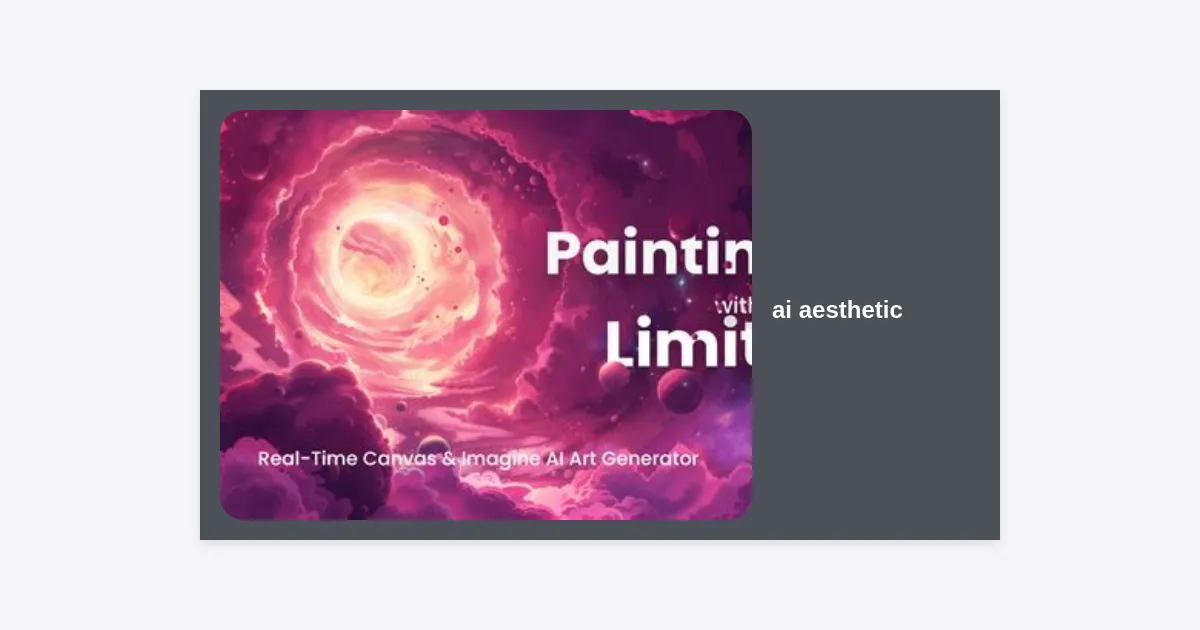
Have you ever scrolled through your social media feed and stopped at an image that felt both incredibly real and hauntingly impossible? That feeling is the hallmark of the ai aesthetic. In just a few short years, artificial intelligence has moved from a niche technical experiment to a dominant force in visual culture, redefining how we perceive art, design, and even reality itself.
Understanding the ai aesthetic is no longer just for tech enthusiasts or digital artists. For marketers, creators, and business owners, it represents a shift in how we communicate visually. This guide will dive deep into the origins, styles, and practical applications of artificial intelligence in the creative world, providing you with everything you need to master this new frontier.
What is the AI Aesthetic?
The ai aesthetic refers to the distinct visual characteristics often found in images generated by neural networks and diffusion models, such as Midjourney, DALL-E, and Stable Diffusion. While these tools can mimic any human style, they often introduce unique textures, lighting patterns, and compositions that have become a recognizable “vibe” in their own right.
Early iterations of AI art were characterized by “deep dream” swirls and distorted faces. Today, the modern ai aesthetic is defined by hyper-realism, ethereal lighting, and a blend of disparate concepts that a human mind might not naturally pair together. It is the marriage of algorithmic precision and chaotic creative potential.
According to recent industry data, over 34% of creative agencies have already integrated AI-generated visuals into their workflows. This isn’t just a trend; it’s the new standard for digital-first content creation.
Core Styles of AI Aesthetic
One of the reasons the ai aesthetic has become so pervasive is its versatility. It doesn’t refer to just one look, but rather a spectrum of styles that AI models excel at producing. Here are the most prominent categories:
1. Cyber-Surrealism and Neo-Vaporwave
AI is exceptionally good at blending the retro-futurism of the 80s with modern high-definition rendering. Think neon pinks, distorted grids, and holographic textures that feel like a dream inside a computer. This style is heavily utilized in music videos and tech branding.
2. Dreamcore and Weirdcore
Many users utilize the ai aesthetic to tap into “liminal spaces”—familiar yet unsettlingly empty environments. AI’s tendency to get small details slightly “wrong” actually enhances the Dreamcore vibe, creating a sense of nostalgia mixed with unease.
3. Hyper-Realistic Nature and Architecture
We are seeing a surge in “Biophilic AI Design.” This involves generating architecture that merges seamlessly with nature—villas built into giant mushrooms or skyscrapers covered in bioluminescent flora. This ai aesthetic allows architects to visualize the impossible before a single brick is laid.
4. Maximalist Digital Collage
Unlike human artists who might be constrained by time, AI can generate immense detail in seconds. The maximalist ai aesthetic features intricate patterns, thousands of individual gold filigrees, and layers of texture that demand the viewer’s attention for several minutes.
The Psychology of the AI Look
Why are we so drawn to the ai aesthetic? Psychologically, it often occupies the “Uncanny Valley”—the space where something looks almost human or real, but not quite. This creates a cognitive dissonance that is naturally engaging to the human brain.
“The beauty of AI art lies not in its ability to replicate reality, but in its ability to hallucinate new versions of it that we never knew we wanted to see.”
Moreover, the ai aesthetic offers a form of escapism. During times of global uncertainty, the ability to generate flawless, vibrant, and utopian landscapes provides a visual comfort that resonates deeply with audiences on platforms like Pinterest and Instagram.
How to Create Your Own AI Aesthetic
Getting started with the ai aesthetic is easier than ever, but mastering it requires a blend of technical knowledge and artistic vision. Follow these actionable steps to begin your journey:
- Choose Your Tool: Midjourney is currently the leader for high-quality artistic aesthetics. DALL-E 3 is excellent for following complex instructions, while Stable Diffusion offers the most control for advanced users.
- Identify Your Core Theme: Don’t just ask for “an image.” Decide if you want a minimalist, dark academia, or solarpunk ai aesthetic.
- Experiment with Aspect Ratios: Visuals for TikTok should be 9:16, while cinematic landscapes should be 21:9. In Midjourney, use the –ar parameter to change this.
- Iterate and Refine: The first image is rarely perfect. Use “Variations” or “Inpainting” tools to fix small errors and hone in on your desired look.
Prompt Engineering for Better Aesthetics
To achieve a professional ai aesthetic, you must move beyond simple descriptions. Prompt engineering is the art of talking to the machine. Use these specific keywords to enhance your results:
Lighting Keywords: Use terms like “volumetric lighting,” “golden hour,” “cinematic rim lighting,” or “soft bokeh” to give your images depth.
Material Keywords: Mention specific textures such as “brushed aluminum,” “translucent resin,” “knitted wool,” or “iridescent glass” to make the image feel tactile.
Camera Settings: Instruct the AI as if you are a photographer. Use phrases like “shot on 35mm lens,” “f/1.8 aperture,” or “long exposure” to control the focus and motion blur.
For those looking to streamline their workflow, you can download our curated list of 100+ high-converting AI prompts here:
AI Aesthetic in Marketing and Branding
Brands are no longer shying away from the ai aesthetic; they are embracing it as a symbol of innovation. Companies like Coca-Cola and Nike have launched campaigns entirely built around AI-generated visuals.
But why? It’s about cost and speed. Traditionally, a photoshoot for a high-end fashion brand could cost tens of thousands of dollars and take weeks to plan. With an AI-driven approach, a brand can test dozens of different visual directions in a single afternoon.
Practical Tip for Small Businesses: Use AI to create consistent social media backgrounds. By using a consistent “seed” or set of lighting prompts, you can ensure that your brand’s ai aesthetic remains uniform across all platforms, building brand recognition without a professional design team.
The Future of AI-Generated Visuals
The ai aesthetic is rapidly evolving. We are moving from static images to generative video. Tools like Sora and Runway Gen-2 are allowing users to bring the surreal logic of AI art into motion.
We are also seeing the rise of “Personalized Aesthetics.” In the near future, websites may change their visual style based on the user’s personal preferences. If you prefer a minimalist look, the AI-powered site will render its UI in that style just for you. This level of hyper-personalization will be the next major milestone in the ai aesthetic journey.
Ethical Considerations and E-E-A-T
As an authoritative source on digital trends, we must address the ethics of the ai aesthetic. While these tools are powerful, they are trained on vast datasets of human-created art. This has led to valid concerns regarding copyright and the displacement of human illustrators.
To demonstrate high E-E-A-T (Experience, Expertise, Authoritativeness, Trustworthiness), creators should consider the following:
- Be Transparent: Always disclose when an image is AI-generated, especially in journalistic or realistic contexts.
- Use for Inspiration, Not Replacement: Use AI to brainstorm and mood board, then bring in human designers to finalize the work.
- Support Human Artists: Use platforms that offer ethical training models or compensate artists whose work is used in training sets.
Conclusion
The ai aesthetic is more than just a passing digital trend; it is a fundamental shift in our visual language. By understanding its key styles, mastering the art of prompt engineering, and staying mindful of the ethical landscape, you can harness this power to create visuals that were previously unimaginable.
Key Takeaways:
- The ai aesthetic is defined by a blend of hyper-realism and surrealism.
- Lighting, material, and camera prompts are essential for high-quality results.
- AI can significantly reduce branding costs while increasing creative output.
- Transparency and ethics remain paramount as the technology evolves.
Are you ready to redefine your visual identity? Start experimenting with these tools today and see where your imagination, combined with the power of the ai aesthetic, can take you.