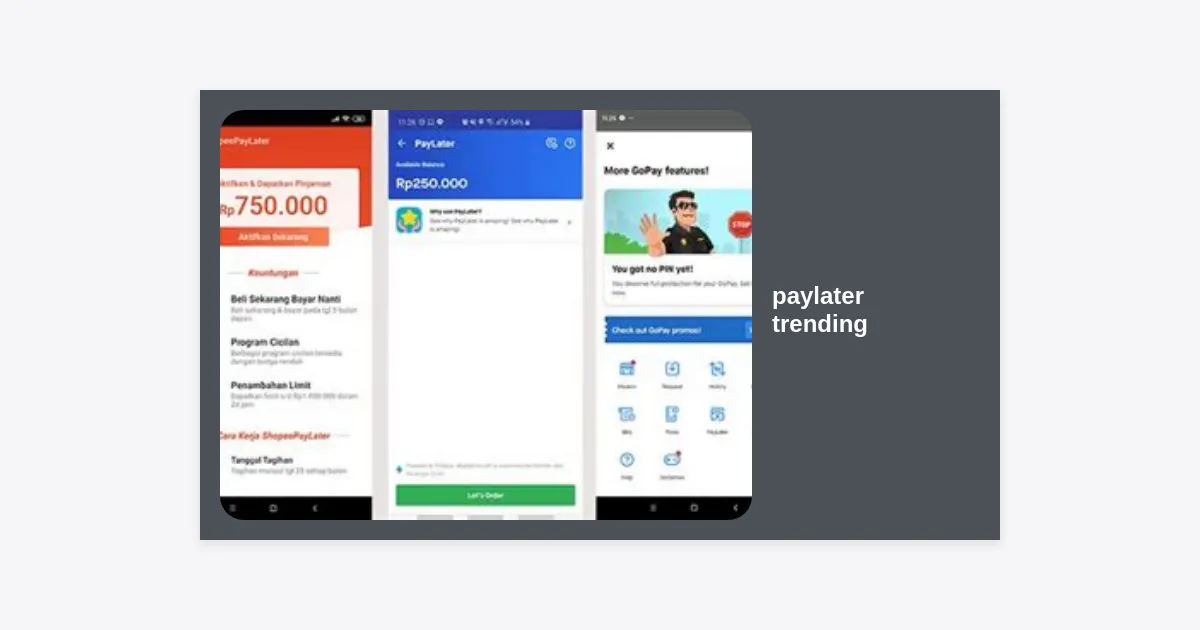
Imagine browsing your favorite online store, finding the perfect gadget or outfit, and instead of seeing a daunting total at checkout, you see a small, manageable monthly payment. This convenience is the core of why paylater trending has become more than just a passing fad—it is a fundamental shift in how the world handles money. As inflation rises and traditional credit cards lose their luster among younger generations, the Buy Now, Pay Later (BNPL) model has emerged as the preferred alternative for millions.
Table of Contents
- What is Pay Later and Why is it Trending?
- The Statistical Rise of the BNPL Market
- Understanding the Consumer Psychology: Why We Love BNPL
- Top Players in the Paylater Trending Ecosystem
- How Retailers Win with Pay Later Integrations
- Navigating the Risks: Interest, Debt, and Regulations
- The Future of BNPL: AI, B2B, and Beyond
- Tips for Using Pay Later Services Responsibly
- Conclusion: The New Standard of Commerce
- Download the Ultimate BNPL Guide
What is Pay Later and Why is it Trending?
At its simplest level, “Pay Later” allows consumers to purchase items immediately and pay for them in installments over a fixed period, often with zero interest if paid on time. Unlike traditional credit cards that rely on revolving debt and high interest rates, the paylater trending movement focuses on transparency and structural simplicity.
The reason paylater trending has captured the market is its accessibility. Most providers perform only a “soft” credit check, which does not impact the user’s credit score, making it an attractive option for those with limited credit history or those who wish to avoid traditional banking hurdles. In a world where financial flexibility is paramount, BNPL offers a digital-first approach that fits perfectly into the mobile-wallet lifestyle.
The Statistical Rise of the BNPL Market
To understand the weight of the paylater trending phenomenon, one must look at the numbers. According to recent market research, the global BNPL market size was valued at approximately USD 30.38 billion in 2023 and is projected to expand at a compound annual growth rate (CAGR) of 22% from 2024 to 2030.
“The shift from credit cards to installment-based payments is the most significant change in retail finance since the introduction of the magnetic stripe.” — Fintech Analyst Report 2024
By 2027, it is estimated that over 900 million people worldwide will be using BNPL services. This growth is fueled by massive adoption in regions like Southeast Asia, Europe, and North America, where e-commerce is maturing and consumers are demanding more diverse payment options at the checkout page.
Understanding the Consumer Psychology: Why We Love BNPL
Why exactly is paylater trending among Gen Z and Millennials? The answer lies in a deep-seated distrust of traditional debt. Many young adults witnessed the financial crises of the past and are wary of high-interest credit cards that facilitate long-term debt traps.
1. Budgeting and Predictability
BNPL offers a fixed payment schedule. If you buy a $200 jacket, you know exactly that you will pay $50 every two weeks. This predictability allows for better monthly budgeting compared to the fluid nature of credit card balances.
2. Frictionless Experience
The integration of pay later options within the checkout flow is seamless. There are no long forms to fill out or physical cards to wait for in the mail. With just a few clicks, the transaction is approved, reinforcing the paylater trending habit through sheer convenience.
3. The “Try Before You Buy” Mentality
Many shoppers use BNPL as a way to audit their purchases. They can order multiple sizes of an item, pay only the first installment, and return what doesn’t fit before the next payment is even due, effectively managing their cash flow while shopping online.
Top Players in the Paylater Trending Ecosystem
The market is currently dominated by a few heavyweights that have become household names. Each offers a slightly different value proposition, contributing to why paylater trending is so diverse.
- Klarna: The Swedish giant known for its “Pay in 4” model and intensive marketing campaigns. Klarna has evolved into a full shopping lifestyle app.
- Affirm: Often seen as the more “responsible” choice, Affirm focuses on larger purchases (like Pelotons or laptops) and often provides longer-term financing options.
- Afterpay: A favorite in the fashion and beauty industry, Afterpay’s strict adherence to a four-installment plan has made it highly popular with younger shoppers.
- PayPal Pay in 4: Leveraging its massive existing user base, PayPal has successfully integrated BNPL into its checkout, making it ubiquitous across millions of websites.
How Retailers Win with Pay Later Integrations
It isn’t just consumers driving the paylater trending wave; merchants are equally enthusiastic. Integrating a BNPL option is no longer a luxury for online retailers; it is a competitive necessity.
Retailers who implement pay later options typically see a 20-30% increase in conversion rates. When customers can break down a large price tag into smaller bites, they are less likely to abandon their carts. Furthermore, the Average Order Value (AOV) often increases because shoppers feel more comfortable adding an extra item to their cart when the immediate cost is low.
Navigating the Risks: Interest, Debt, and Regulations
Despite its popularity, the paylater trending movement is not without its critics. Financial experts warn that the ease of use can lead to impulsive spending and over-extension. While many plans are interest-free, missing a payment can result in late fees and, in some cases, damage to credit scores if the provider reports to credit bureaus.
Regulatory Scrutiny
Governments are taking notice. The Consumer Financial Protection Bureau (CFPB) in the United States and the FCA in the UK are working on frameworks to ensure BNPL providers are transparent about their terms and treat customers fairly. This regulation is actually a sign of the industry maturing; it ensures that paylater trending remains a sustainable financial tool rather than a predatory one.
The Future of BNPL: AI, B2B, and Beyond
What is next for the paylater trending world? We are already seeing the emergence of “B2B BNPL,” where businesses use installment plans to manage their inventory and supply chain costs. This could revolutionize how small businesses operate by freeing up their capital.
Furthermore, Artificial Intelligence is being used to refine credit risk assessments. By analyzing real-time spending data rather than just old credit scores, AI allows providers to offer credit to an even wider, yet still responsible, audience. We are moving toward a “Unified Checkout” where the pay-later option is the default, not the exception.
Tips for Using Pay Later Services Responsibly
To make the most of the paylater trending movement without falling into debt, consider these actionable steps:
- Set a Limit: Just because a provider gives you a $1,000 limit doesn’t mean you should use it. Set your own personal spending cap.
- Track Your Payments: Use an app or a spreadsheet to track when different installments are due to avoid accidental late fees.
- Use for Essentials or Quality: Instead of using BNPL for fast fashion, use it for high-quality items that will last longer, effectively spreading the cost of a long-term investment.
- Check for Hidden Interest: Always read the fine print. Some “pay later” options for large items do carry interest rates similar to credit cards.
Conclusion: The New Standard of Commerce
The reality of paylater trending is that it has fundamentally democratized access to credit. By moving away from the complex world of traditional banking and into the palms of consumers’ hands, BNPL has created a more fluid, inclusive, and transparent economy. Whether you are a shopper looking to balance your budget or a merchant looking to grow your brand, the pay later revolution offers tools that were unthinkable just a decade ago.
As we move into 2025, expect to see even more innovation in this space. The key is to embrace the flexibility while maintaining the discipline required to stay financially healthy. The paylater trending movement is here to stay, and it’s changing the way we think about every dollar we spend.
Download the Ultimate BNPL Guide
Want to master your finances and find the best pay later apps for your needs? Download our comprehensive 2024 guide to navigating the BNPL landscape.