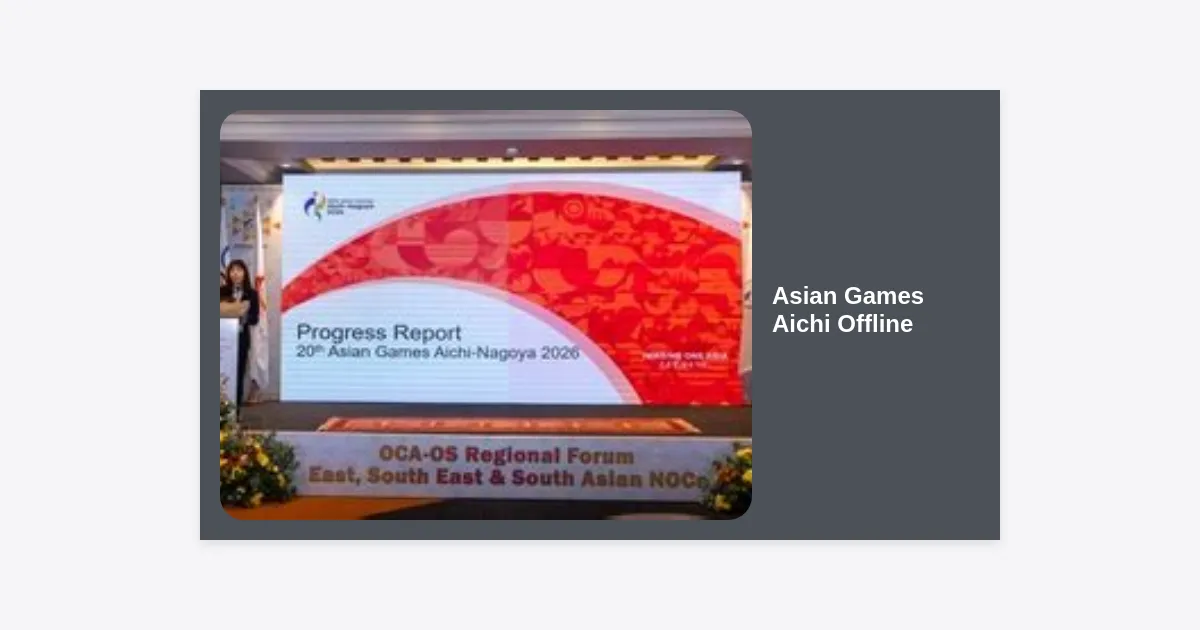
The roar of the crowd, the palpable tension in the stadium, and the historic moments of athletic brilliance—nothing compares to the energy of witnessing international sports live. As anticipation builds for the 20th Asian Games, many fans are looking for the best ways to experience the Asian Games Aichi Offline. Attending the games in person in the Aichi Prefecture and the city of Nagoya offers a unique cultural immersion that goes far beyond what any digital broadcast can provide. In this comprehensive guide, we will explore everything you need to know about planning your offline visit to Japan for this prestigious event.
- Overview of Aichi-Nagoya 2026
- Why Experience the Asian Games Aichi Offline?
- Key Venues and Locations
- The Sports Program: What to Watch
- Ticketing Strategy and Access
- Travel and Local Transportation
- Accommodation Tips for International Visitors
- Cultural Highlights in Aichi and Nagoya
- Practical Advice for a Smooth Trip
- Conclusion and Final Takeaways
Overview of Aichi-Nagoya 2026
The 20th Asian Games are scheduled to take place from September 19 to October 4, 2026. This marks the third time Japan has hosted the Asian Games, following Tokyo in 1958 and Hiroshima in 1994. The event is co-hosted by the Aichi Prefecture and Nagoya City, showcasing the heart of Japan’s industrial and cultural engine.
By choosing to attend the Asian Games Aichi Offline, you are placing yourself at the center of a historic gathering of 45 national Olympic committees. The games aim to promote “Imagine One Asia,” emphasizing unity, sportsmanship, and technological innovation. With thousands of athletes participating across dozens of disciplines, the scale of the event is second only to the Summer Olympics.
Why Experience the Asian Games Aichi Offline?
In an age of high-definition streaming, you might wonder why the offline experience is worth the journey. The Asian Games Aichi Offline atmosphere is irreplaceable. There is a specific kind of magic that happens when fans from diverse cultures gather in a single arena to cheer for their nations.
Attending in person allows you to feel the vibration of the track, hear the precise splash of a diver, and witness the raw emotion of victory and defeat. Furthermore, being “offline” in Japan means enjoying the hospitality of Omotenashi, discovering local delicacies like Hitsumabushi (grilled eel), and exploring ancient Shinto shrines between matches. It is a holistic experience that connects sport with travel and personal growth.
Key Venues and Locations
The Asian Games Aichi Offline experience is not confined to a single stadium. The events are spread across various cities in the Aichi Prefecture, turning the entire region into a sporting playground. Understanding the venue layout is crucial for planning your daily itinerary.
- Mizuho Olympic Village & Athletics Stadium: Located in Nagoya, this will be a primary hub for track and field events.
- Nagoya City Indoor Sports Center: Expected to host gymnastics and other indoor disciplines.
- Toyota Stadium: Renowned for its architecture, this venue in Toyota City will likely host major football (soccer) matches.
- Vantelin Dome Nagoya: A premier baseball stadium that reflects Japan’s deep love for the sport.
- Satellite Venues: Several events will take place in surrounding cities like Ichinomiya, Kasugai, and Inuyama, allowing visitors to see more of the prefecture.
Pro Tip: When attending the Asian Games Aichi Offline, map out your venues in advance. Some locations are over an hour apart via public transport, so grouping your event tickets by location is a smart strategy.
The Sports Program: What to Watch
The 2026 games will feature 41 sports, including the core Olympic sports and those popular across the Asian continent. Whether you are a fan of traditional athletics or niche regional sports, there is something for everyone to enjoy offline.
Popular Spectator Sports
Swimming, athletics, and gymnastics traditionally draw the largest crowds. However, baseball and softball are expected to be massive hits in Japan, given their local popularity. Watching these matches offline provides a glimpse into the local fan culture, which is both respectful and incredibly passionate.
Regional Specialities
The Asian Games are unique for including sports like Kabaddi, Sepak Takraw, and various Martial Arts (Karate, Judo, Wushu). Seeing these sports live is a rare opportunity for many international travelers and one of the best reasons to attend the Asian Games Aichi Offline.
Ticketing Strategy and Access
Securing tickets is the most critical step for anyone planning to attend the Asian Games Aichi Offline. Tickets are typically released in phases, starting with a lottery system for residents, followed by general sales for international visitors.
- Register Early: Create an account on the official Aichi-Nagoya 2026 ticketing portal as soon as it opens.
- Prioritize High-Demand Finals: If you want to see a gold medal match in swimming or gymnastics, apply for those in the first wave of sales.
- Check Authorized Ticket Resellers (ATRs): International fans should check with their local National Olympic Committee or designated travel agencies.
- Walk-in Tickets: While rare for major events, some smaller preliminary matches may have ticket booths on-site for spontaneous offline viewing.
Travel and Local Transportation
Japan is famous for its world-class transportation system. Navigating the Asian Games Aichi Offline will be relatively straightforward if you use the right tools. Nagoya is a major transport hub, making it easily accessible from Tokyo and Osaka.
Getting to Aichi
If you are flying internationally, Chubu Centrair International Airport (NGO) is your primary gateway. It is situated on an artificial island and offers direct train links to central Nagoya via the Meitetsu Line. Alternatively, the Shinkansen (Bullet Train) connects Nagoya to Tokyo in about 1.5 hours and Osaka in 50 minutes.
Navigating the Region
For your Asian Games Aichi Offline journey, purchase an IC Card (like Manaca, Suica, or Pasmo). These rechargeable cards work on almost all subways, buses, and trains in the region. The Nagoya Subway system is efficient and clean, with English signage at every station. Consider getting a “Donichi Eco Kippu” (One-day bus and subway pass) if you plan on doing significant sightseeing on weekends.
Accommodation Tips for International Visitors
Finding the right place to stay can make or break your trip. During the Asian Games Aichi Offline, hotels will fill up quickly, so booking 6-12 months in advance is highly recommended.
- Nagoya Station Area: Best for transportation and convenience. You’ll have easy access to all train lines and plenty of dining options.
- Sakae District: The heart of Nagoya’s nightlife and shopping. Great for those who want to explore the city after the games end for the day.
- Kanayama: A secondary transport hub that is often slightly cheaper than the station area but still very well-connected.
- Toyota City: Useful if you plan on spending most of your time watching football or events located in the eastern part of the prefecture.
Cultural Highlights in Aichi and Nagoya
Your trip to the Asian Games Aichi Offline is a perfect Excuse to explore Central Japan. Aichi is a land of samurais, craftsmanship, and modern industry. Between matches, make sure to visit these landmarks:
Nagoya Castle: Famous for its golden shachihoko (tiger-headed carp) and its beautifully reconstructed Honmaru Goten Palace. It is a testament to the power of the Tokugawa Shogunate.
SCMAGLEV and Railway Park: A must-visit for tech enthusiasts, showcasing the history and future of high-speed rail in Japan, including the record-breaking Maglev trains.
Inuyama Castle: One of the oldest original castles in Japan, offering a stunning view of the Kiso River. It provides a peaceful escape from the hustle and bustle of the games.
Osu Kannon Temple and Shopping Street: A vibrant area where traditional spiritual life meets modern pop culture, electronics, and street food.
Practical Advice for a Smooth Trip
To ensure your Asian Games Aichi Offline experience is stress-free, keep these practical points in mind:
- Connectivity: Even though you are attending “offline,” you will need a pocket Wi-Fi or an eSIM to navigate maps and translation apps.
- Cash is Still King: While many places in Japan now accept cards, small shops and some ticket machines in temples still require yen.
- Weather: September in Aichi can be quite warm and humid, with a possibility of typhoons. Bring a portable fan, sun protection, and a lightweight raincoat.
- Etiquette: Japan is a society of manners. Avoid eating while walking and be mindful of noise levels on public transport.
Essential Phrases to Know
While many volunteers at the Asian Games Aichi Offline will speak English, knowing a few Japanese phrases will enhance your interaction with locals:
- Arigato Gozaimasu (Thank you)
- Sumimasen (Excuse me / Sorry)
- Doko desu ka? (Where is it?)
- Kite morae masu ka? (Can you help me?)
Conclusion and Final Takeaways
The Asian Games Aichi Offline experience promises to be a spectacular fusion of world-class athleticism and rich Japanese heritage. By planning ahead—securing your tickets, booking your accommodation in Nagoya, and understanding the local transport—you can ensure a trip that is both exciting and culturally rewarding.
The 2026 Asian Games represent more than just a competition; they are a celebration of human potential and continental friendship. Whether you are there to witness a world record or simply to soak in the atmosphere of Aichi, the memories you create offline will last a lifetime.
| Feature | Detail |
|---|---|
| Event Name | 20th Asian Games (Aichi-Nagoya 2026) |
| Main Host City | Nagoya, Aichi Prefecture, Japan |
| Dates | September 19 – October 4, 2026 |
| Number of Sports | 41 Sports |
| Expected Athletes | Approximately 15,000 |
Ready to start your journey? Keep an eye on the official Aichi-Nagoya 2026 website for the latest updates on venue capacities and scheduled ticket releases. We’ll see you offline in Japan!