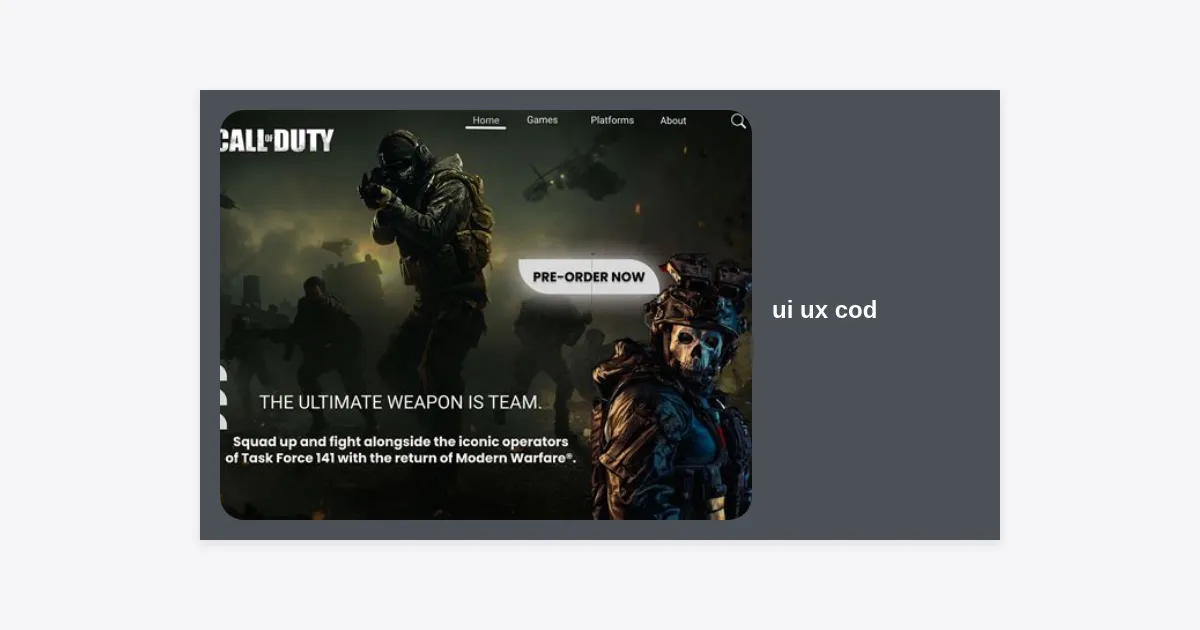
In the rapidly evolving landscape of digital product development, the term ui ux cod has emerged as a pivotal concept that bridges the gap between aesthetic vision and functional reality. For years, designers and developers worked in silos, often leading to friction, lost details, and a final product that failed to live up to the original prototype. Today, mastering the synergy of ui ux cod is no longer just an advantage; it is a necessity for anyone looking to build high-performance, user-centric applications.
Table of Contents
- What is UI UX Cod? Understanding the Convergence
- The Importance of Alignment: Why Design Needs Development
- Key Principles of Effective UI UX Cod Workflows
- Essential Tools for Bridging the Gap
- Best Practices for Writing UI-Friendly Code
- Common Pitfalls in the Design-to-Code Process
- The Future of UI UX Cod: AI and Beyond
- Conclusion: Your Next Steps in Mastering UI UX Cod
What is UI UX Cod? Understanding the Convergence
At its core, ui ux cod refers to the intersectional discipline where User Interface (UI) design, User Experience (UX) strategy, and front-end coding (Cod) meet. While a UI designer focuses on the layout and visual elements, and a UX designer focuses on the journey and usability, the “cod” aspect ensures that these elements are translated into a performant, accessible, and scalable codebase.
Integrating ui ux cod means moving beyond static mockups. It involves creating design systems that speak the same language as CSS frameworks, understanding how animations impact browser performance, and ensuring that every click or swipe feels as intuitive in the browser as it did in the design tool. By focusing on ui ux cod, teams can decrease time-to-market and significantly improve user satisfaction scores.
The Importance of Alignment: Why Design Needs Development
In traditional workflows, the “handover” was a moment of dread. Designers provides a PDF or a Figma file, and developers were left to guess margins, font weights, and transition timings. This disconnect is exactly what a strong foundation in ui ux cod seeks to eliminate. When designers understand the constraints of code, and developers understand the logic behind a user’s flow, the result is a superior product.
“Design is not just what it looks like and feels like. Design is how it works.” — Steve Jobs
This quote perfectly encapsulates the philosophy behind ui ux cod. If a beautiful design cannot be coded efficiently—or if the code fails to respect the design’s nuances—the user experience suffers. Statistics show that nearly 80% of users will abandon a site if the UI is non-responsive or the loading times are sluggish due to poorly optimized design elements. This is why the technical implementation (the “cod”) is just as vital as the visual intent.
Key Principles of Effective UI UX Cod Workflows
To master the ui ux cod workflow, several foundational principles must be followed. These ensure that the transition from a canvas to a browser is seamless.
- Consistency through Design Tokens: Design tokens are the smallest atoms of your design system (colors, spacing, typography). By sharing these tokens between the design tool and the code, you ensure that “Primary Blue” is exactly the same hex code in both environments.
- Component-Driven Development: Both UI/UX and code thrive on modularity. Building components in React or Vue that mirror your Figma components allows for a “plug-and-play” architecture.
- Responsive Logic: Understanding how a layout breaks across different screen sizes is a core part of ui ux cod. It is not enough to design for mobile and desktop; the code must handle the fluid transition between them.
- Accessibility (a11y) First: A major part of the “cod” in ui ux cod is ensuring HTML semantics and ARIA labels are used correctly to make the UI accessible to everyone.
Essential Tools for Bridging the Gap
Modern technology has provided us with an array of tools specifically designed to facilitate the ui ux cod connection. Leveraging these tools can save hundreds of hours of manual labor.
| Tool Category | Recommended Software | Primary Purpose in UI UX Cod |
|---|---|---|
| Design & Prototyping | Figma, Adobe XD | Visualizing the UI and testing user flows. |
| Handoff Tools | Zeplin, Storybook | Providing developers with specs and component documentation. |
| Frameworks | Tailwind CSS, Bootstrap | Speeding up the coding process with pre-defined utility classes. |
| Version Control | GitHub, GitLab | Managing changes in the UI code collaboratively. |
Best Practices for Writing UI-Friendly Code
When you are deep in the “cod” phase of your ui ux cod project, the goal is to write clean, maintainable code that respects the UX designer’s vision. Here are some actionable tips:
- Avoid Hardcoded Values: Use variables for spacing and colors. This makes it easy to update the entire UI UX cod ecosystem by changing a single file.
- Optimize Assets: Large images kill UX. Use WebP formats and SVG icons whenever possible to keep the site light and fast.
- Prioritize Semantic HTML: Use <header>, <main>, and <footer> tags. This isn’t just for SEO; it’s a fundamental part of a robust ui ux cod implementation.
- Focus on Feedback Loops: Ensure every user action has a visual response—a button press should change color, and a form submission should show a loader.
Exclusive UI UX Cod Implementation Checklist
To help you get started, we have developed a comprehensive checklist that ensures your design and code are perfectly synced. This resource is essential for project managers and lead developers.
Common Pitfalls in the Design-to-Code Process
Even with the best intentions, the ui ux cod process can hit snags. One common mistake is “Over-Engineering.” Sometimes developers spend too much time building complex animations that the UX research suggests users find distracting. Conversely, designers might create “Unbuildable Designs”—layouts that look great in a static image but violate the laws of web layout and browser performance.
Communication breakdown is another major hurdle. If the designer changes a shadow depth in Figma but doesn’t notify the developer, the ui ux cod consistency is broken. This is why regular sync-ups and a shared language are vital components of authoritativeness in digital product creation.
The Future of UI UX Cod: AI and Beyond
We are entering an era where AI is beginning to write initial UI code from sketches. However, the human touch in ui ux cod remains irreplaceable. AI can generate code, but it cannot yet empathize with a user’s frustration or understand the brand nuances that a human UI/UX designer can pinpoint.
Expect to see more “no-code” and “low-code” tools that allow designers to export production-ready ui ux cod directly. This will place even more emphasis on design thinking and logic, as the manual labor of translation becomes automated. Staying ahead of these trends requires a commitment to continuous learning and a deep understanding of how design influences performance.
Conclusion: Your Next Steps in Mastering UI UX Cod
The convergence of ui ux cod represents the future of the web. By breaking down the barriers between the visual and the technical, you create products that are not only beautiful but also resilient and user-friendly. Key takeaways from this guide include the importance of design tokens, the power of component-driven development, and the necessity of constant communication between disciplines.
Next Steps: Start by auditing your current workflow. Are your designers and developers using the same naming conventions? Is your design system reflected in your CSS? By answering these questions, you take the first step toward a perfect ui ux cod integration. Embrace the overlap, continue experimenting with new tools, and always keep the end-user at the heart of your code.