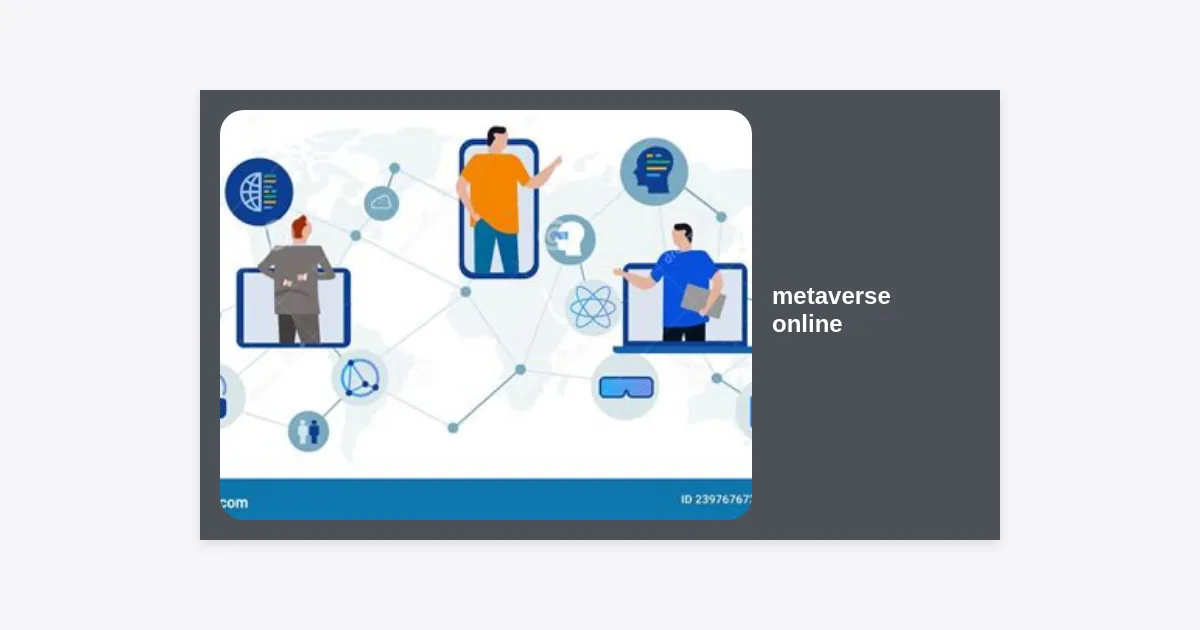
Imagine a world where the boundaries between the physical and digital realities vanish. You aren’t just looking at a screen; you are inside the experience. This isn’t science fiction; it is the metaverse online, a burgeoning ecosystem that is redefining how we socialise, work, and trade. Whether you are a curious explorer or a business looking to pivot, understanding the metaverse is no longer optional—it is essential for staying relevant in the Web3 era.
Table of Contents
- What Exactly is the Metaverse Online?
- How to Access the Metaverse Today: A Step-by-Step Guide
- Top Platforms to Explore in 2024
- Economic and Business Opportunities
- The Core Technologies Driving the Shift
- Navigating Challenges: Privacy and Security
- The Future of the Metaverse Online
- Conclusion and Key Takeaways
What Exactly is the Metaverse Online?
The metaverse online refers to a collective virtual shared space, created by the convergence of virtually enhanced physical reality and physically persistent virtual space. It is often described as the “spatial internet.” Rather than visiting a website, you inhabit a 3D environment where your identity is represented by an avatar.
To understand its scale, consider these key characteristics:
- Persistence: The metaverse never resets or pauses; it continues to exist and evolve even when you are logged off.
- Synchronicity: Users experience events in real-time together, similar to a physical concert or sporting event.
- Interoperability: In an ideal metaverse, your digital assets (like a jacket or a sword) can be moved from one platform to another effortlessly.
- Economic Depth: It features a fully functioning economy where individuals and businesses can create, own, invest, and sell.
“The metaverse is a massive-scale and interoperable network of real-time rendered 3D virtual worlds that can be experienced synchronously and persistently by an effectively unlimited number of users.” — Matthew Ball, Metaverse Theorist.
How to Access the Metaverse Today: A Step-by-Step Guide
Contrary to popular belief, you don’t necessarily need a thousand-dollar VR headset to explore the metaverse online. While immersive hardware enhances the experience, many entry points are accessible via standard hardware.
Minimum Requirements
To get started, you will generally need a stable internet connection and a device capable of rendering 3D graphics. High-speed fiber optic connections (at least 20-50 Mbps) are recommended to reduce latency (lag), which can cause motion sickness in VR environments.
Hardware Options
- PC and Mac: The most common entry point. Platforms like Decentraland and The Sandbox run directly in your browser or via a light desktop client.
- Mobile Devices: Millions of users access the metaverse through smartphones via apps like Roblox or Pokémon GO.
- VR Headsets: For a fully immersive experience, devices like the Meta Quest 3, PlayStation VR2, or the Apple Vision Pro offer stereoscopic 3D and spatial audio.
Top Platforms to Explore in 2024
There is no single “Metaverse”; instead, there are various platforms that together form the metaverse online ecosystem. Here are the leading destinations:
1. Decentraland
Decentraland is a decentralized 3D virtual world platform where users can buy virtual plots of land (LAND) as NFTs via the MANA cryptocurrency. It is governed by a Decentralized Autonomous Organization (DAO), meaning users have a vote in how the world evolves.
2. The Sandbox
Focused heavily on gaming and creativity, The Sandbox allows users to create their own games and assets using VoxEdit and Game Maker. It has partnered with major brands like Snoop Dogg, Adidas, and Atari to create branded experiences.
3. Meta Horizon Worlds
Meta’s (formerly Facebook) flagship social platform focused on building communities and professional collaboration. It is designed specifically for the Quest ecosystem, emphasizing hand tracking and social presence.
4. Roblox and Fortnite
While often classified as games, these platforms are the “proto-metaverse.” They boast millions of active users who don’t just play but attend concerts, shop for digital fashion, and socialize in user-generated spaces.
Economic and Business Opportunities
For brands and entrepreneurs, the metaverse online represents a trillion-dollar opportunity. Citibank predicts the metaverse economy could be worth between $8 trillion and $13 trillion by 2030.
Virtual Real Estate
Just like in the physical world, location matters. Investing in virtual land near high-traffic hubs in Decentraland or The Sandbox has become a lucrative (though speculative) venture. Companies are building virtual showrooms, galleries, and even corporate offices in these spaces.
The Rise of Digital Fashion (Direct-to-Avatar)
People care about how they look in the digital world. Brands like Gucci, Nike (RTFKT), and Balenciaga are selling digital wearables. These items are often backed by NFTs, providing proof of ownership and scarcity.
The Core Technologies Driving the Shift
The metaverse online is not a single technology but a stack of various innovations working in unison:
- Blockchain and NFTs: These provide the infrastructure for digital ownership. Without blockchain, you couldn’t truly “own” a digital item; you would only be licensing it from the platform owner.
- Artificial Intelligence (AI): AI drives the creation of realistic avatars, world-building tools, and non-player characters (NPCs) that can interact naturally with humans.
- Spatial Computing: This allows digital content to coexist with and interact with the physical world, a key component of Augmented Reality (AR).
- Edge Computing: To reduce lag, processing happens closer to the user, ensuring that the metaverse online experience is smooth and responsive.
Navigating Challenges: Privacy and Security
As we spend more time in the metaverse online, new risks emerge. Privacy is perhaps the biggest concern. VR headsets can track eye movements, heart rates, and even gait, providing data that could be misused if not properly regulated.
Furthermore, security in the metaverse is critical. Cryptocurrency scams, phishing in virtual social spaces, and the “griefing” (harassment) of avatars are issues platforms are currently struggling to solve. Actionable Tip: Always use hardware wallets for high-value NFTs and enable two-factor authentication (2FA) on all metaverse accounts.
The Future of the Metaverse Online: Trends for 2025 and Beyond
We are currently in the “modem era” of the metaverse. What comes next? Expect to see a shift toward interoperable standards where you can take your avatar from a business meeting in Meta Horizon straight into a game in The Sandbox without changing clothes or accounts.
We will also see the rise of “Digital Twins”—virtual replicas of entire cities that allow town planners to simulate traffic and energy use before making physical changes. The metaverse online will transition from being a place we “visit” to an ambient layer that enhances our daily reality.
Ready to Start Your Journey?
Download our comprehensive 50-page PDF guide on “The Metaverse Starter Kit: Assets, Avatars, and Action” to get a head start on the competition.
Conclusion and Key Takeaways
The metaverse online is more than just a buzzword; it is the next iteration of the internet. While still in its infancy, the framework for a decentralized, immersive, and 3D digital future is being built today.
Key Takeaways:
- The metaverse is defined by persistence, synchronicity, and digital ownership.
- You don’t need expensive gear to start; a PC or mobile phone is often enough.
- Economic opportunities range from virtual real estate to digital fashion.
- Security and privacy should be your top priorities when navigating these spaces.
Don’t wait for the future to happen—participate in it. Whether by creating an avatar or exploring a virtual gallery, the best way to understand the metaverse online is to experience it for yourself. The digital frontier is waiting.