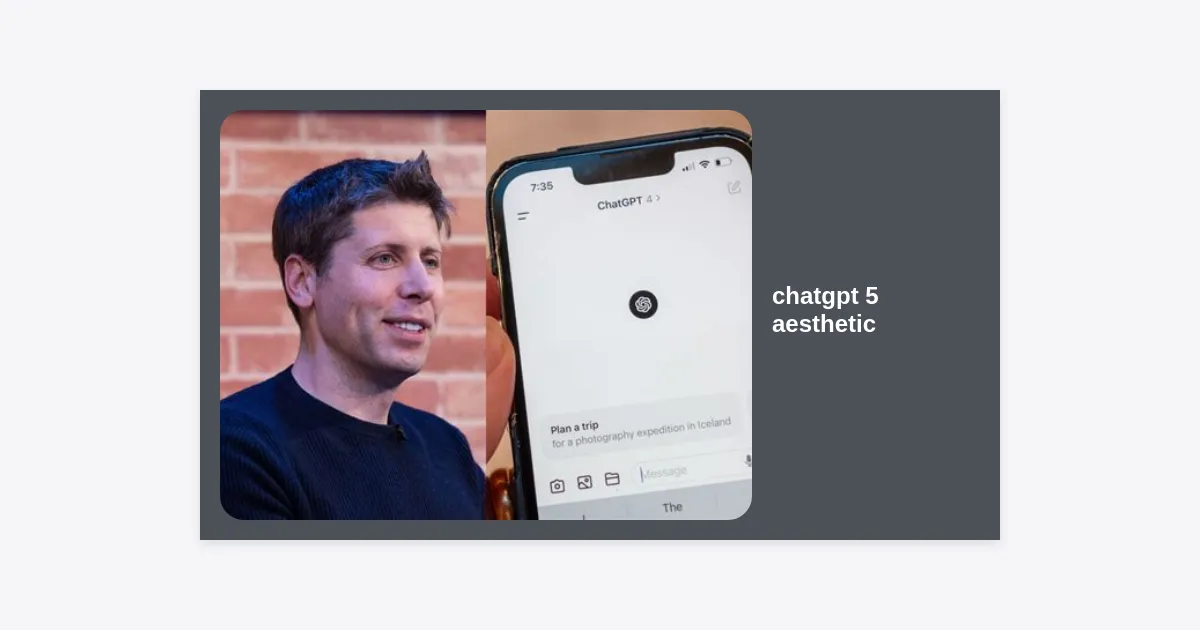
As we stand on the precipice of the next major leap in artificial intelligence, the tech world is buzzing with anticipation over more than just processing power. The chatgpt 5 aesthetic is becoming a central topic of conversation for designers, developers, and casual users alike. While the underlying engine of GPT-5 promises unprecedented reasoning capabilities, the visual and experiential layer—the way we actually interact with the machine—will define how AI integrates into our daily lives. In this guide, we explore the predicted design shifts, user interface (UI) innovations, and the evolving “vibe” of the world’s most popular AI.
Table of Contents
- The Evolution of AI Design: From Terminal to GPT-5
- Defining the ChatGPT 5 Aesthetic: Visual Identity
- UX Innovations: Beyond the Chat Bubble
- Personalization and Customization Dynamics
- The Sonic Aesthetic: The Voice of GPT-5
- How Aesthetics Impact User Productivity
- Actionable Steps: Preparing for the New Interface
- Conclusion: The Future is Beautifully Intelligent
The Evolution of AI Design: From Terminal to GPT-5
Artificial intelligence has traditionally been a “black box” technology. In its early days, interacting with AI meant staring at a command-line interface with haunting green text on a black background. When ChatGPT first launched, it broke this mold by adopting a clean, conversational UI. However, as we look toward the chatgpt 5 aesthetic, we are moving away from simple utility and toward emotional resonance.
GPT-3 was functional but utilitarian. GPT-4 introduced better management of history and some sidebar improvements. But for GPT-5, industry experts expect a shift toward “Human-Centric Design.” This entails a move from a tool that just processes queries to a companion that understands context through visual cues and fluid animations.
Defining the ChatGPT 5 Aesthetic: Visual Identity
What exactly characterizes the chatgpt 5 aesthetic? While OpenAI remains secretive about the final look, design trends suggest several key elements will dominate. We aren’t just looking at a new logo; we are looking at a complete overhaul of the digital environment.
Minimalism Meeting Materiality
The trend of “Glassmorphism”—the use of translucent backgrounds and frosted glass effects—is likely to permeate the GPT-5 interface. This gives the user a sense of depth and hierarchy, making the AI feel like a floating assistant rather than a static webpage. Aesthetic clarity is the goal here, ensuring that the user isn’t overwhelmed by data but guided by it.
Dynamic Color Palettes
We expect the chatgpt 5 aesthetic to move beyond the standard white/dark mode toggle. Adaptive color palettes that change based on the complexity of the task or the time of day are highly anticipated. For example, a creative writing task might trigger a softer, warmer color profile (sepia and cream), while a coding session might shift to a high-contrast, focus-driven dark mode.
“Design is not just what it looks like and feels like. Design is how it works.” – Steve Jobs. This sentiment will be the cornerstone of the GPT-5 upgrade.
UX Innovations: Beyond the Chat Bubble
The current “chat bubble” format is nearly a decade old in terms of UX standards. The chatgpt 5 aesthetic will likely disrupt this paradigm by introducing “Canvas-based” interactions. Instead of a linear scroll of messages, imagine a workspace where the AI can spread out ideas, generate images on a side panel, and edit code in a real-time window simultaneously.
- Fluid Transitions: Smooth, physics-based animations that make the AI feel alive.
- Gesture Control: For tablet and mobile users, an aesthetic built around swipe-based refining of answers.
- Contextual Awareness: An interface that changes its layout based on whether you are analyzing a spreadsheet or writing a poem.
Personalization and Customization Dynamics
A major pillar of the chatgpt 5 aesthetic is the ability for the user to make the interface their own. Users no longer want a one-size-fits-all tool. They want an AI that fits their personal “vibe.” This could mean custom themes, font choices, or even specific avatar designs for the AI.
According to recent UX studies, 74% of users feel more productive when they can customize their digital workspace. OpenAI is likely to lean into this, offering “Aesthetic Presets” such as “Cyberpunk Focus,” “Clean Academic,” or “Soft Minimalist.”
The Sonic Aesthetic: The Voice of GPT-5
The chatgpt 5 aesthetic isn’t just visual; it’s auditory. With the advancements in OpenAI’s voice engine, the audible personality of GPT-5 will be a game-changer. We are looking at voice profiles that carry emotional weight, subtle breathing patterns, and varied inflections that make the interaction feel remarkably human.
The aesthetic here is “Naturalism.” The goal is to remove the robotic cadence found in legacy systems and replace it with a voice that can whisper, convey excitement, or sound thoughtful when processing complex information.
Soundscapes and Ambient Focus
Beyond voice, we might see the introduction of ambient soundscapes. Imagine GPT-5 playing low-fi beats or white noise while you work together on a deep-focus project, seamlessly integrated into the background of the UI.
How Aesthetics Impact User Productivity
It is a common misconception that aesthetic is merely “surface-level.” In the context of the chatgpt 5 aesthetic, design is a tool for reducing cognitive load. A cluttered, dated UI leads to “decision fatigue.” A clean, modern aesthetic allows the user’s brain to focus entirely on the content being generated.
Statistical Insight: Modern UI design can improve user task completion rates by up to 200%. By optimizing the GPT-5 aesthetic, OpenAI isn’t just making it look better—they are making us smarter and faster.
Actionable Steps: Preparing for the New Interface
As we transition into the era of the chatgpt 5 aesthetic, there are several things you can do to prepare your digital ecosystem for this change:
- Audit Your Workflows: Identify which parts of your workflow rely on clear visual data. GPT-5 will likely offer better ways to visualize this.
- Embrace Voice Commands: Start getting used to hands-free interaction, as the sonic aesthetic will make this the primary mode of use for many.
- Clean Up Your Custom Instructions: The way the AI presents information (its “persona” aesthetic) is heavily influenced by your instructions. Refine them now to get ahead.
To help you align your personal branding with the upcoming shifts, we’ve created a handy guide you can download below.
Conclusion: The Future is Beautifully Intelligent
The chatgpt 5 aesthetic represents more than a coat of paint. It is the bridge between human creativity and machine intelligence. By focusing on minimalism, personalization, and emotional resonance, OpenAI is creating an environment where high-level problem solving feels second nature. As we look forward to the official release, one thing is certain: the future of AI will not only be more powerful, but it will also be more beautiful, intuitive, and human-centric than ever before.
Key Takeaways:
- The visual identity of GPT-5 will lean toward Glassmorphism and adaptive UI.
- User customization will be a priority, allowing for personal “vibes.”
- The auditory experience will be as important as the visual one.
- Aesthetic improvements are directly linked to increased user productivity and reduced cognitive load.