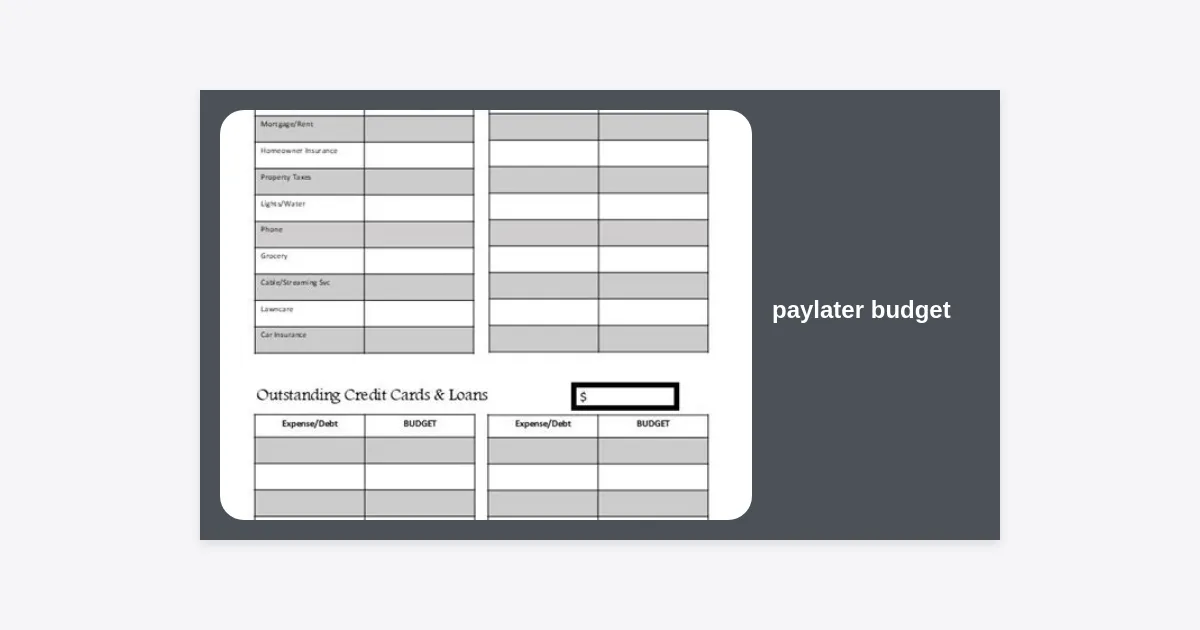
In an era where the digital checkout line is dominated by tempting buttons offering to “pay in four,” managing a paylater budget has become an essential skill for the modern consumer. The convenience of Buy Now, Pay Later (BNPL) services like Klarna, Afterpay, and Affirm is undeniable, but without a strategic approach, these micro-loans can quickly snowball into a financial mountain. Have you ever looked at your bank statement and realized that five different $20 payments are hitting your account in the same week? If so, you are not alone, and it is time to take control.
Understanding the Impact of BNPL on Your Finances
To master a paylater budget, one must first understand what these services actually are: short-term installment loans. Unlike traditional credit cards that offer a revolving line of credit, BNPL services typically break a single purchase into four equal payments over six weeks, often with 0% interest if paid on time.
While this sounds like a financial win, the danger lies in the lack of visibility. Because these payments are smaller, consumers often feel they have more “wiggle room” than they actually do. This is why integrating these installments into your primary paylater budget is crucial for maintaining long-term solvency.
The Psychology of the Paylater Budget
Why do we love “Pay Later” so much? Behavioral economics suggests that BNPL reduces the “pain of paying.” When we part with a large sum of money upfront, our brain registers it as a loss. However, breaking that cost down into smaller chunks tricks our psychology into perceiving the item as less expensive, even though the total cost remains the same.
An effective paylater budget accounts for this cognitive bias. By documenting every installment the moment you click “purchase,” you re-introduce that necessary friction back into the spending process. This ensures that your hardware, clothing, or travel purchases are intentional rather than impulsive.
How to Set Up a Sustainable Paylater Budget
Setting up a paylater budget is not just about tracking what you owe; it is about forecasting what you can afford in the future. Follow these steps to build a robust framework:
Step 1: The Inventory Audit
Start by listing every active BNPL plan you currently have. Use a simple spreadsheet or a budgeting app to track the following for each purchase:
- Total purchase amount
- Remaining balance
- Date of the next payment
- Service provider (Klarna, Affirm, etc.)
Step 2: The 10% Ceiling Rule
Experts recommend that your total monthly BNPL payments should never exceed 10% of your discretionary income. If your “fun money” for the month is $500, your paylater budget total for all installments should cap at $50. This creates a safety net for unexpected expenses.
Step 3: Align with Income Cycles
One of the biggest risks to a paylater budget is timing. If most of your installments fall on the 15th of the month, but you get paid on the 30th, you risk overdraft fees. Always check the payment schedule before confirming a purchase to ensure it aligns with your cash flow.
“A budget doesn’t limit your freedom; it gives you freedom from the anxiety of not knowing where your money went.” – Financial Advisor Insight
BNPL Statistics: What the Data Says
Understanding the landscape of BNPL can help you see why a paylater budget is no longer optional. Recent financial reports highlight a significant shift in consumer behavior:
| Metric | Statistic |
|---|---|
| Average BNPL User Age | 18-44 (Gen Z and Millennials) |
| Percentage of Users Who Missed a Payment | Approx. 15-20% in 2023 |
| Average Number of Concurrent Plans | 2.5 plans per user |
| Primary Reason for Using BNPL | Avoiding credit card interest |
As the table above suggests, while avoiding interest is a primary goal, a significant portion of users still struggle with missed payments. This usually occurs because they lack a dedicated paylater budget to track multiple concurrent plans.
Common Pitfalls and How to Avoid Them
Even with the best intentions, managing a paylater budget can go awry. Here are the most common traps and how to navigate them:
Over-automation: While autopay is convenient, it can lead to “set it and forget it” syndrome. You might forget that a large payment is coming out, leading to insufficient funds in your checking account. Solution: Set a calendar alert two days before a payment is due.
Returns Complexity: Returning an item bought with BNPL is notoriously difficult. You often have to keep making payments to the BNPL provider while waiting for the merchant to process the refund. Solution: Never use BNPL for items you are unsure about (like clothes in multiple sizes).
Credit Score Impact: Many believe BNPL doesn’t affect credit. However, missed payments can be reported to credit bureaus, and some providers perform “hard” credit checks for larger loans. How it affects your paylater budget: Treat every installment with the same weight as a mortgage or car payment.
Advanced Strategies for Cash Flow Optimization
For the financially savvy, a paylater budget can actually be used as a tool for wealth building. This is known as leveraging “Other People’s Money” (OPM). If you have the full cash amount for a purchase, you can keep that money in a high-yield savings account (HYSA) earning interest, while paying off the item in interest-free installments.
For example, if you buy a $1,000 laptop and use a BNPL service to pay $250 every two weeks, the remaining $750 stays in your HYSA, earning you coffee money in interest. However, this strategy only works if you have the discipline to stick to your paylater budget and don’t spend that $750 on something else.
Ready to Organize Your Finances?
Track your BNPL installments like a pro with our free template.
Conclusion and Key Takeaways
Integrating BNPL into your financial routine doesn’t have to be a source of stress. By creating a dedicated paylater budget, you can enjoy the benefits of flexible payments without falling into the debt trap. Remember, the key is visibility, discipline, and planning.
Key Takeaways:
- Treat BNPL as a Debt: Every installment is a financial obligation that must be tracked.
- Limit Your Exposure: Keep your total paylater budget below 10% of your discretionary income.
- Sync with Payday: Ensure your payment dates align with when money actually enters your account.
- Use Tools: Utilize spreadsheets or specialized apps to keep all installments in one view.
As long as you remain the master of your paylater budget, rather than letting your installments master you, BNPL can be a powerful tool for modern financial management. Start by auditing your current plans today and setting a hard limit for the month ahead.